
I'm Jason Sayen.
I help growing companies identify the invisible work that's slowing them down, and I've spent my career learning how to see it.
I learned it on a factory floor.
I spent over ten years at a large speaker and electronics manufacturer in South Florida. On breaks, I walked the factory floor just to watch things get built. In Lean, that's called a gemba walk: going to where the work actually happens to see it for yourself. I didn't know the term yet. I just liked seeing how things got made.
Every station had a screen showing each step, how to do it and how not to. Parts were already at the station when you needed them. When a cabinet took screws at different torque settings, nobody had to remember to change the setting. They picked up a different tool, color-coded and preset. The standard was built into the work.
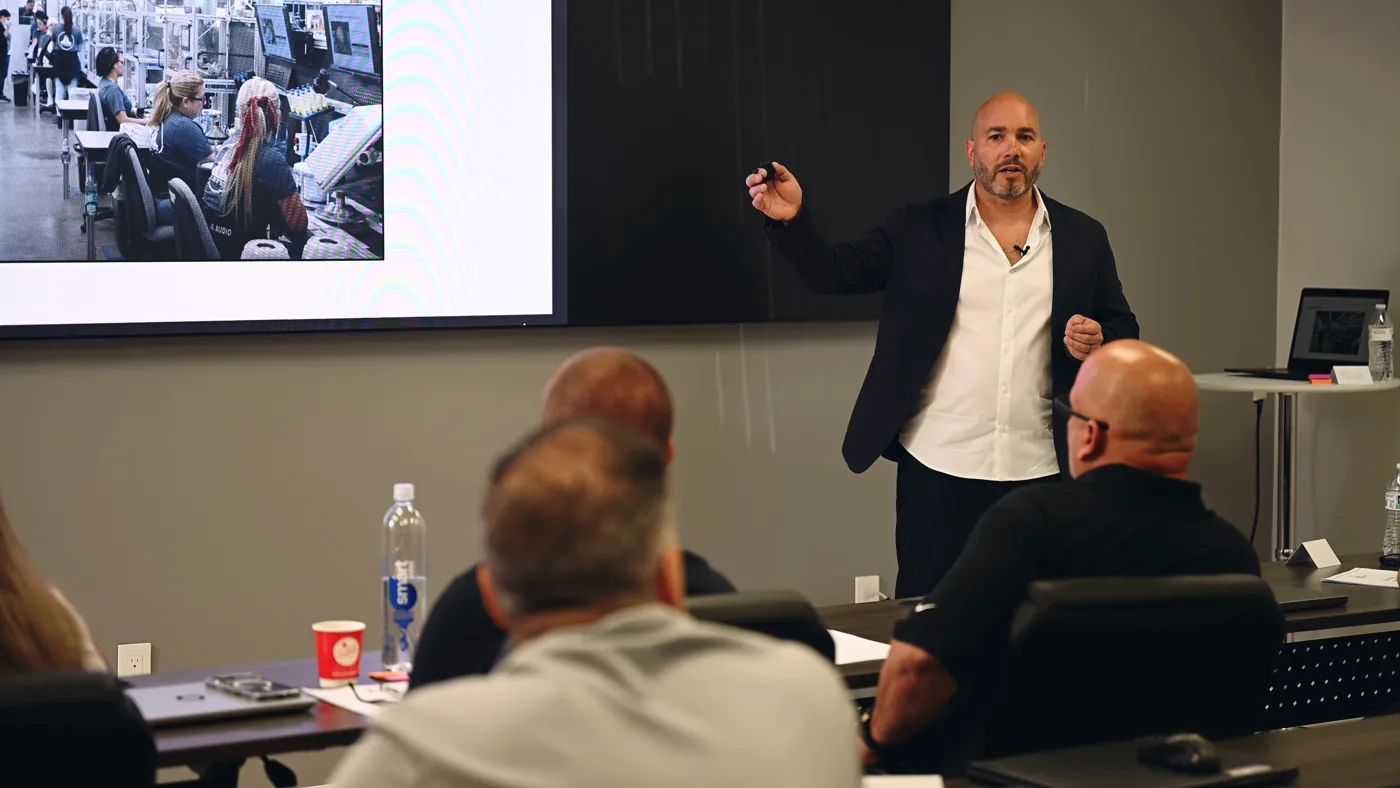
Then I'd walk back to the office, where none of that existed. Work moved by email and hallway conversations. When it came to planning sales promotions, it was ready… fire… aim. We were always releasing them mid-month, reacting to our competition instead of planning ahead. When I asked why we didn't change our process, I heard “that's the way we do it” or “we don't have time.” But we always found time later to react. I kept seeing the same thing at every job after that.
Then I went and got the tools.
Years later, I went and got the formal training. I earned my Lean Six Sigma Green Belt in 2017 and my Black Belt in 2018. I left the heavy statistics of Six Sigma behind and kept the Lean: following the work, mapping how it flows and asking “why” until you reach the real answer.
To earn my Black Belt, I took on a project with a local plumbing contracting firm with about 30 people and six trucks. We analyzed their monthly truck audit and how technicians ordered parts. Technicians placed orders on an iPad, the order went to customer service by email, customer service printed it and dropped it in a bin, and the warehouse manager walked over a few times a day to collect it. When I asked the owner why customer service was involved at all, he answered right away: a former warehouse manager wasn't trusted with a computer. That person was long gone, but the workaround was still there. We redesigned the process so orders went straight to the warehouse, and customer service became 50% more efficient without adding a single piece of software. We didn't start with a fix. We started by looking at how the work actually moved.
Then, after one of my talks at an industry conference, an owner asked me to take what was in his head about how his business ran and map it out, so everyone could see how work flows through the company. Two hours of “How does a client come into your company?” and “What happens next?” became the first version of the G.U.I.D.E. framework I still use today.
Most of the time, it isn't a people problem. It's a workaround nobody went back to question.
What I believe
- Process FIRST. Software second. Software doesn't fix a broken process. It automates it.
- Good people look bad inside unclear process.
- “They should know” isn't a process. Neither is “it's common sense.”
- Finding what's broken isn't the hard part. Making the change stick is.
- Put structure in place so you manage exceptions, not get managed by them.
30+ years inside growing companies
I've spent more than 30 years inside growing companies in luxury consumer electronics, and working alongside specialty contractors.
As a Process Architect, I've worked directly with more than 100 companies, from custom integration to fintech, financial services, capital investment, franchising, manufacturing, renewable energy and healthcare technology, and with hundreds more through workshops and industry events.
- Lean Six Sigma Black Belt
- 100+ companies
- Speaker at industry events
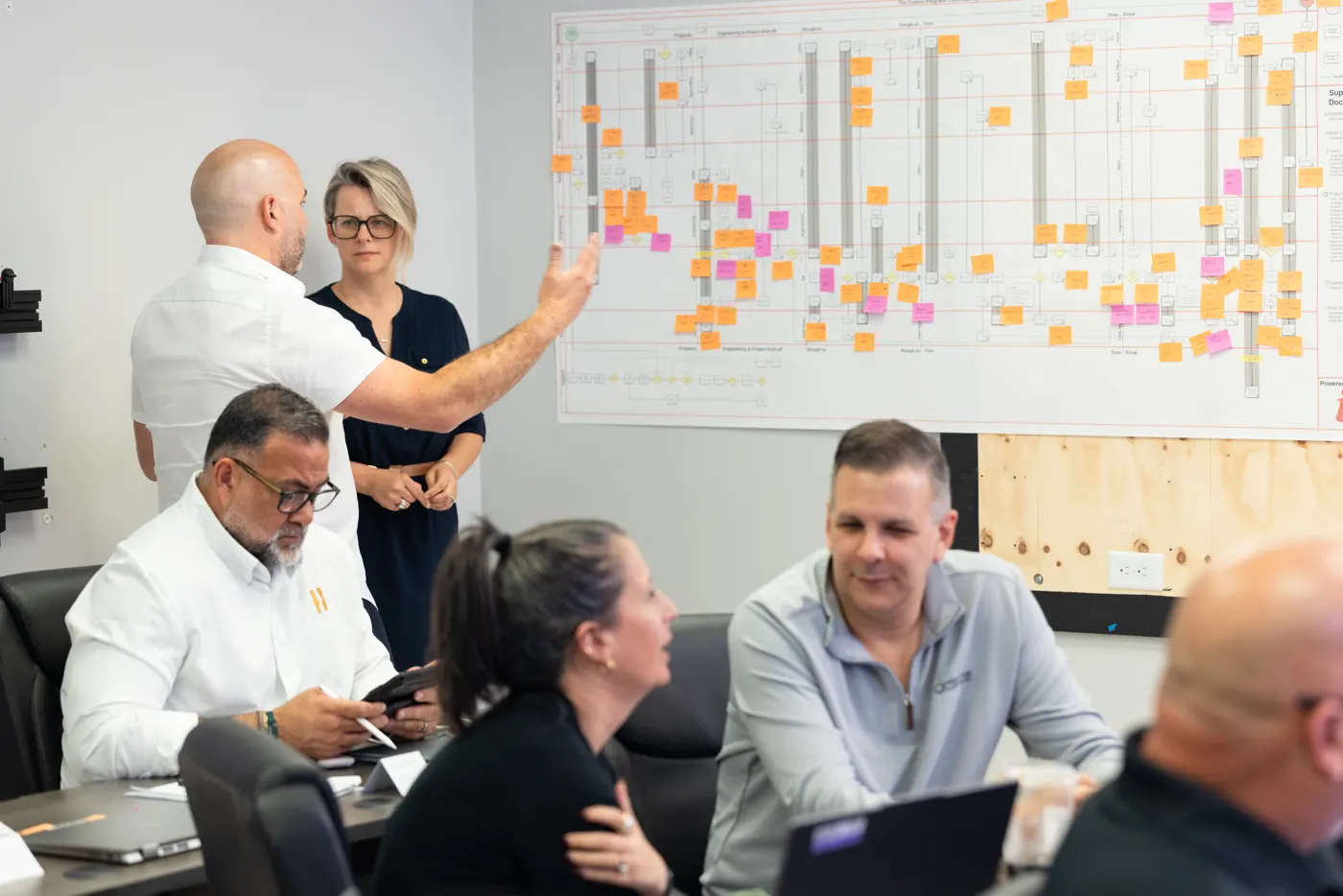
“We had our eyes wide open within our first hour of Day 1.”
Ryan Donaher · Apex Technologies US
What's Your Process?
One email a month on making invisible work visible.